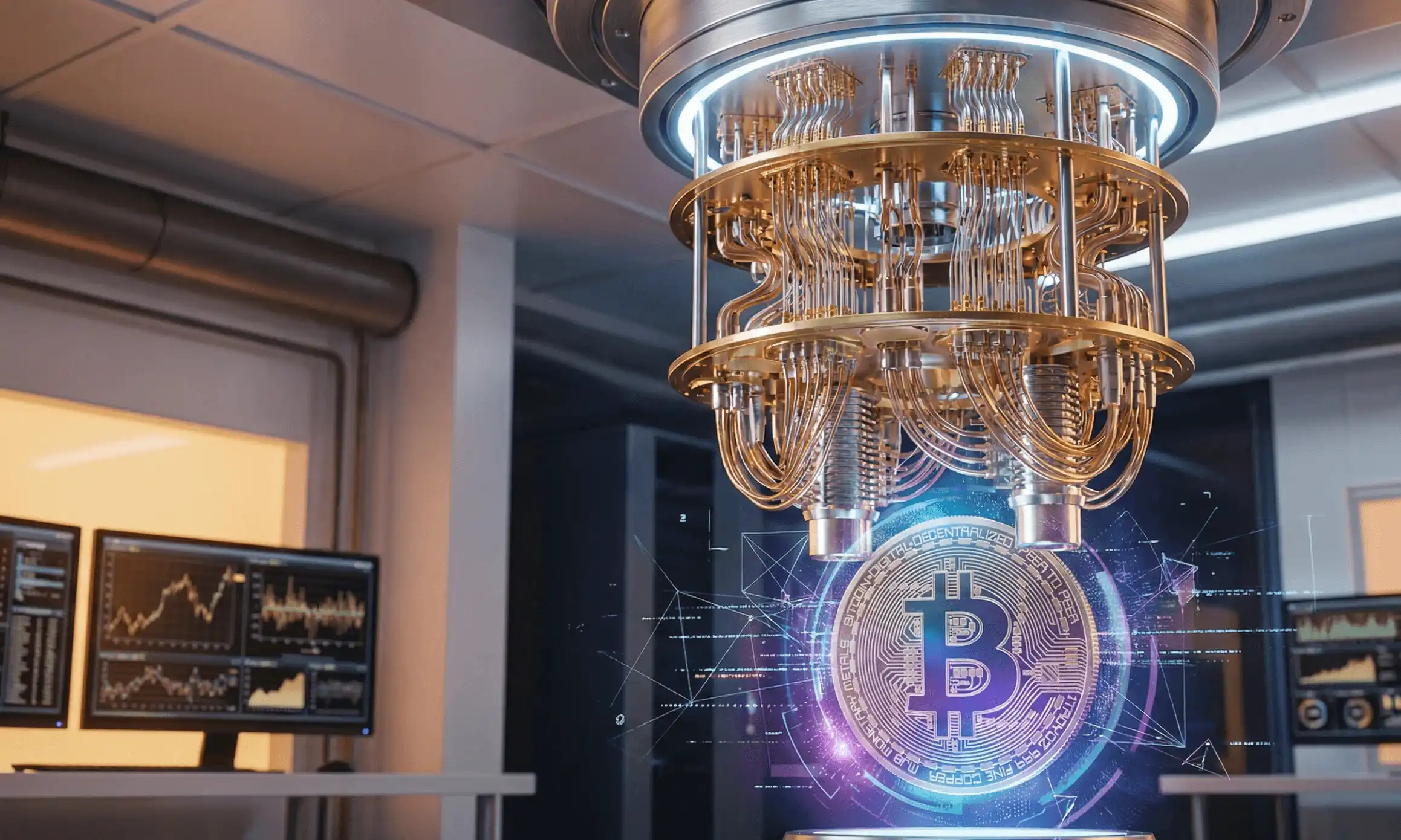
Ethereum Is Pivoting Into The AI Industry? Here’s What We Know So Far

bitcoinistPublished on 2026-01-30Last updated on 2026-01-30

Abstract

Ethereum is expanding into the AI sector with the upcoming launch of the ERC-8004 standard, designed to integrate AI agents directly onto its blockchain. This update enables AI systems to operate with unique on-chain identities, represented as ERC-721 NFTs, and verifiable reputations. It supports decentralized AI-to-AI interactions without relying on centralized platforms, allowing agents to record actions and outcomes on-chain for transparency. The proposal, led by developers including MetaMask's AI lead, is set to go live on January 30. This initiative builds on Ethereum's ongoing efforts, including its dedicated dAI Team, to position the blockchain as a foundational layer for AI coordination and autonomous systems.

Ethereum (ETH) is extending its influence in the AI industry as developers aim to integrate AI with decentralized technology. Building on this, new reports have revealed that ETH developers are preparing to roll out an AI-focused update that could see AI agents work and engage directly on the blockchain network.

Ethereum Prepares To Launch New AI Agent Standards

Ethereum is getting ready to launch a major update that could transform how artificial intelligence interacts with blockchain. The new upgrade, called ERC-8004, uses blockchain to find, select, and work with AI agents across different organizations without pre-existing trust, enabling open-need agent economies.

On January 27, the Ethereum team made an official announcement revealing that ERC-8004 will go live soon, opening the door for projects to integrate with AI in a decentralized way. Marco De Rossi, one of the primary authors of ERC-8004 and the AI lead at MetaMask, stated that development of the protocol has been frozen, as the team prepares to deploy it on the mainnet, with a likely launch around 9 AM ET on Thursday, January 30.

The proposal was initially submitted in August 2025 and has since undergone multiple rounds of community review and revision before reaching its final implementation stage. Early adopters have also tested the system to explore new applications for autonomous AI agents.

The new ERC-8004 protocol is designed to give AI agents on Ethereum unique identities and verifiable reputations, enabling autonomous systems to interact without relying on centralized platforms. Each AI agent will receive a unique ERC-721 NFT as its on-chain ID, serving as a digital passport. The system also supports ENS domains, allowing agents to have readable names and securely delegate control when needed.

ERC-8004 also introduces on-chain mechanisms for reputation and validation, enabling AI agents to record feedback and prove task execution outcomes. The protocol also allows agents to record their actions and performance on the blockchain, so other AI agents and users can verify their interactions and build trust quickly.

Importantly, the AI Lead at the Ethereum Foundation has also shared his thoughts on the new ERC-8004 standard. He said that Ethereum is now uniquely positioned to be the platform that “secures and settles AI-to-AI interactions.”

ETH’s Deep Dive Into The AI Industry

Ethereum is explaining its role in artificial intelligence, building on earlier efforts to connect the industry with decentralized technology. While the upcoming ERC-8004 standard for AI agents has gained massive attention, it is not Ethereum’s first move into AI. The network has been exploring ways to support blockchain and AI development for years, laying the groundwork for a broader ecosystem.

For instance, the Ethereum Foundation previously established a dedicated AI team, known as the dAI Team. This group is tasked with creating infrastructure that allows Ethereum to act as a coordination and settlement layer for autonomous systems.

ETH trading at $2,948 on the 1D chart | Source: ETHUSDT on Tradingview.com

Related Questions

QWhat is the name of the new Ethereum upgrade focused on AI agents and what is its key purpose?

AThe new upgrade is called ERC-8004. Its key purpose is to enable AI agents to work and engage directly on the blockchain by giving them unique identities and verifiable reputations, allowing for open-need agent economies without pre-existing trust.

QWho is one of the primary authors of ERC-8004 and what is their role at MetaMask?

AMarco De Rossi is one of the primary authors of ERC-8004 and is the AI lead at MetaMask.

QWhat type of on-chain identity will each AI agent receive according to the ERC-8004 protocol?

AEach AI agent will receive a unique ERC-721 NFT as its on-chain ID, which serves as a digital passport.

QAccording to the article, what did the AI Lead at the Ethereum Foundation say about Ethereum's new role?

AThe AI Lead at the Ethereum Foundation stated that Ethereum is now uniquely positioned to be the platform that 'secures and settles AI-to-AI interactions.'

QWhat is the name of the dedicated AI team previously established by the Ethereum Foundation and what is its mission?

AThe dedicated AI team is called the dAI Team. Its mission is to create infrastructure that allows Ethereum to act as a coordination and settlement layer for autonomous systems.

Related Reads

What Are the Most Profitable CEOs in Crypto Doing Right Now?

Amid a wave of new stablecoin launches, Tether CEO Paolo Ardoino is leading a strategic shift toward regulatory compliance and mainstream legitimacy. The company recently introduced USAT, its first fully U.S.-regulated stablecoin, directly competing with Circle’s USDC. This marks a departure from Tether’s controversial past, during which it faced allegations of opacity and facilitating illicit activities. Ardoino emphasizes Tether’s collaboration with U.S. agencies like the FBI and Secret Service, highlighting its ability to freeze illicit transactions—$3.5 billion has been frozen to date. He defends Tether’s record, noting its resilience during crises like the TerraLuna collapse and its rapid processing of massive redemptions. With over $300 billion in excess reserves and a user base of 536 million—growing by 30 million per quarter—Tether’s influence is substantial. Ardoino positions the company not just as a stablecoin issuer but as a broader force for financial inclusion, especially in economies with hyperinflation. Beyond stablecoins, Tether is expanding into gold-backed tokens, holding roughly 140 tons of gold, and investing heavily in AI, robotics, and infrastructure. Its decentralized AI platform, Qvac, aims to serve underserved populations. Ardoino envisions Tether as a stability-focused entity, akin to a sovereign wealth fund, built to endure political and economic shifts.

marsbit35m ago

What Are the Most Profitable CEOs in Crypto Doing Right Now?

marsbit35m ago

Trading

Spot
Futures

Hot Articles

Discussions

Welcome to the HTX Community. Here, you can stay informed about the latest platform developments and gain access to professional market insights. Users' opinions on the price of ETH (ETH) are presented below.

活动图片